Dec, 2024
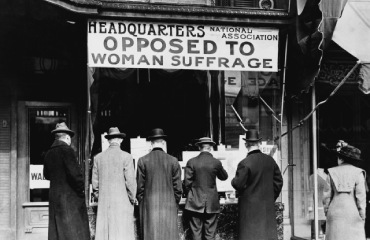
With the beginning of the Industrial Revolution, men moved from agriculture and rural parts to manufacturing and creating urban centers. This period saw a decline in women’s labor force participation, as the factories were not open to women, so they took the role of the homemaker and care provider. The next big event that shook the status quo was the world wars. The men folk were needed on the war fronts, and factories needed to be “manned”. This was the beginning of women’s labor in manufacturing, and since then, it has steadily increased over the last century. However, this economic presence also enforced the women’s rights movements in other dimensions. One such dimension was the political voice of the women.
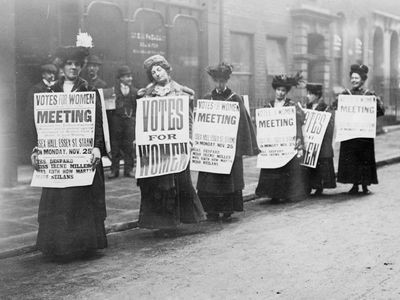
Women's suffrage: London demonstrators Suffragettes holding signs in London, c. 1912. Image Courtesy: Britannica
The women’s suffrage movement represents a pivotal point in history, marked by the struggle for women to gain the right to vote. Most developed countries introduced universal suffrage in the late 1910s and early 1920s following the end of World War 1. We trace the narrative of the World Wars through the women’s struggle for the right to vote. Furthermore, it is vital to consider how these women voted once they gained the right to vote. The literature surrounding women’s voting patterns emphasizes the “intrinsic differences between male and female” to explain women’s political behavior. Historically, this is traced from the vote of women to right-wing parties based on religious beliefs to the emergence of the women’s vote favoring left-wing political parties after the feminist movements took root in Europe. However, this narrative divorces the women’s choices from rational choices, initially, when they vote for the political right. We intend to establish the economic rationale for the women’s vote, suggesting that they also voted based on policies and economic views of the political parties, the same as their men folk. Sitting in India, women may feel that the right to vote comes with democratization. However, this was not the case for early European and American democracy. Women’s vote came many years after men earned the right to vote. It took women more than 50 years from the struggle to the right.
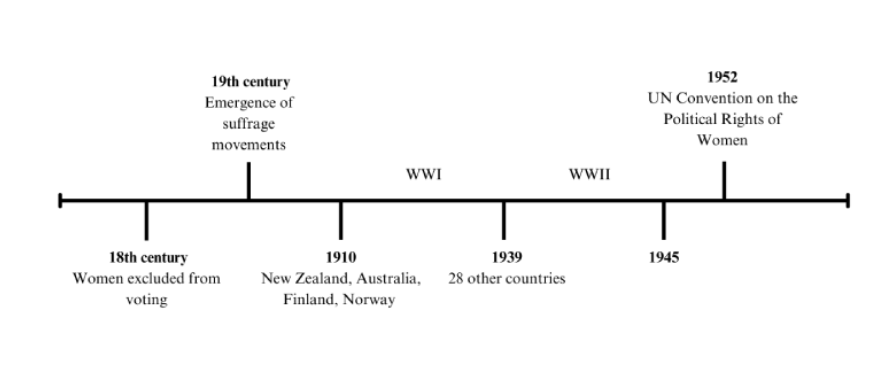
Figure 1: Historical Timeline of the USA Adapted from Long (1958) “Female Labour Supply: A Survey”
Women were excluded from voting in most of the elections held around the globe by the end of the 18th century. Throughout the century, a few instances of franchises being extended to white women in local elections were noted, however, at large, women continued to be denied all voting rights. Following the emergence of suffragette movements, the question of women’s voting rights finally became an issue in the 19th century. The women's suffrage movement experienced significant intensity in the United States and Great Britain, although these nations were not the first to implement national women's voting rights. By the early 20th century, several countries had already granted women suffrage, including New Zealand (1893), Australia (1902), Finland (1906), and Norway (1913). Limited voting rights for women in local elections were also established in certain regions, notably in Sweden and the United States.
During this period, women's labor force participation increased dramatically as the men were out at war, and the factories had to be manned by women. Therefore, the granting of political rights to women in these nations coincided with them becoming an important economic powerhouse.
Graph 1: Female Labour Force Participation in the United States and United Kingdom Sources: World Bank Data, ILOSTAT, and Our World in Data
The political voice is synchronized with the economic voice of the women. It is difficult to imagine if the political movement in and of itself would have been as successful if women had not gained momentum in the economic domain. The period is marked by the realization that the economy cannot function without the participation of women, and hence, they earned their seats at the political table as well.
The First World War was fought mainly in Europe between August 1914 and November 1918. The US government did not formally enter the conflict until the resumption of German submarine attacks on American shipping in the spring of 1917. The entry of the United States into the fighting in Europe momentarily slowed the longstanding national campaign to win women’s right to vote. Many suffragettes shelved the movement between 1917 and 1919 to support various relief and war industry efforts. The industrial demands of modern war meant that women moved into the labor force and contributed to the war effort on the home front. American women participated in a wide variety of activities such as munitions production and other defense industry work, performing non-traditional jobs usually handled by men, including funds through liberty loan drives and leading the effort to produce and conserve food needed by soldiers overseas.
The "We Can Do It!" poster, created by J. Howard Miller in 1942 for Westinghouse Electric. Public domain image.
In 1918, President Wilson, who had ignored suffrage in his 1916 address to Congress, gave an address in which he supported suffrage “as a war measure”, noting that the war could not be fought effectively without women’s participation (Witte, 2020). The war highlighted the economic and strategic value of women to the country. The contribution women made during the war had an impact on attitudes toward women. Politicians and the public alike recognized that women deserved greater political rights (Witte, 2020). It dispelled any remaining widespread beliefs that women were unable to cope with traditionally male jobs.
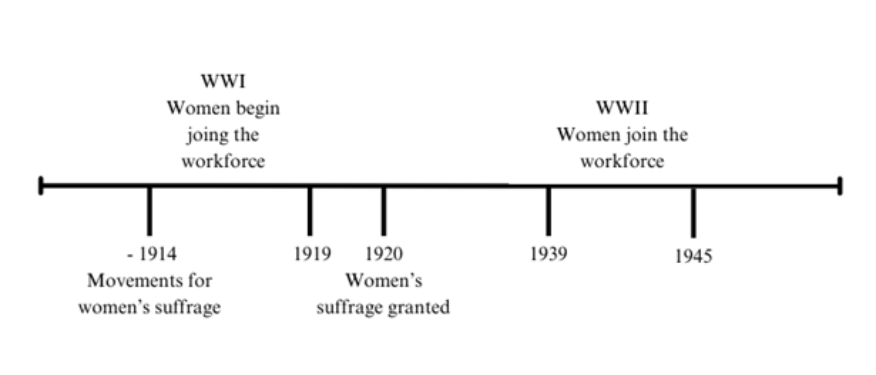
Figure 2: Historical Timeline of the USA
Adapted from Long (1958) “Female Labour Supply: A Survey”
Less than two years later, the US Secretary of State signed into law the 19th Amendment to the Constitution, stating that “the right of citizens of the United States to vote shall not be denied or abridged by the United States or by any State on account of sex” (National Archives).
A similar trend was seen during World War II as well. Over three hundred fifty thousand women volunteered for military service, while twenty times as many stepped into civilian jobs, including positions previously closed to them (McEuen, 2016) This set the precedence for the various civil rights movements that shaped the United States in the second half of the 20th century.
The UK followed a similar trajectory. Women’s occupations during the second half of the 19th century and early 20th century included work in textiles, clothing factories, commerce, and farms. According to a 1911 census, domestic service was the largest employer of women and girls, with 28% of all employed women (1.35 million women) in England and Wales engaged in domestic service (Braybon, 2012). During WWI, large numbers of women were recruited into jobs vacated by men who had gone to fight in the war. Women’s employment rates increased during WWI, from 23.6% of the working-age population in 1914 to between 37.7% and 46.7% in 1918 (Braybon, 2012). The employment of married women increased sharply – accounting for nearly 40% of all women workers by 1918. As a result, the position of women in the economic sphere became undeniable to many. In 1928, women in England, Wales, and Scotland received the vote on the same terms as men because of the Representation of the People Act 1928. However, following the First World War, many returning servicemen reclaimed the available jobs, and the number of women workers declined due to the shortage of jobs caused by the recession (Braybon, 2012).
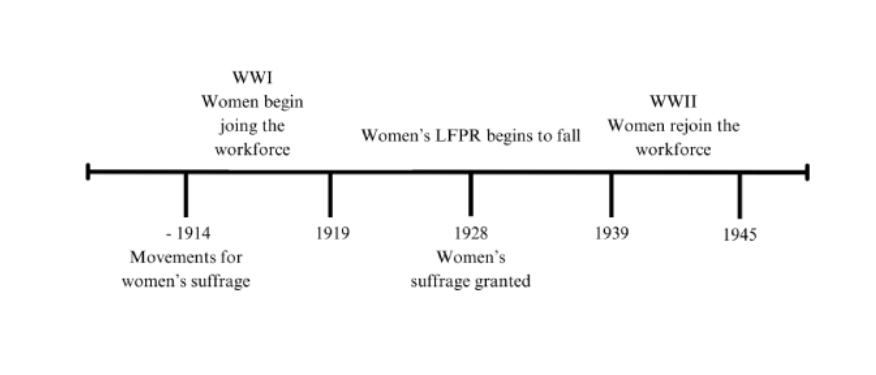
Figure 3: Figure 2: Historical Timeline of the UK
Adapted from Long (1958) “Female Labour Supply: A Survey”
The story of women’s employment during WWI was repeated during WWII. In December 1941, the government conscripted single women aged 20 – 30 as auxiliaries to the Armed Forces, Civil Defense, or war industries – women’s labor was now needed in the army. Figures show that women’s employment increased during the Second World War from about 5.1 million in 1939 (26%) to just over 7.25 million in 1943 (36% of all women of working age) (HM Government, 1943). 40% of all women aged between 14 and 59 and 90% of all able-bodied single women between the ages of 18 and 40 were engaged in some form of work or National Service by September 1943 (HM Government, 1943). However, unlike the 1920s, the late 1940s and 50s were periods of sustained economic growth. The post-war reconstruction effort made the need for an expanded labor force urgent. In the late 1940s, the government launched campaigns to encourage women to enter or stay in the labor market and encouraged the migration of workers from (former) British colonies to fill the labor shortages (HM Government, 1943). Political and economic rights go hand in hand when we think of women’s empowerment. This is borne out in history as much as it is true today. Shocks to the status quo have helped break the shackles of social norms when it comes to increased participation of women in economic activity The World Wars were a catalyst for the developed countries' women, and the digital revolution and calamities like COVID are forcing current-day societies to break out of the bounds of norms and practices.
McEuen, M. A. (2016). Women, Gender, and World War II. Oxford Research Encyclopedia of American History.
Braybon, G. (2012). Women Workers in the First World War. London: Routledge.
HM Government. (1943). National Conference of Women Called by H.M. Government: Report of Proceedings: 28th September. London.
Witte, M. D. (2020, August 12). Stanford Report. Retrieved from World War I strengthened women’s suffrage, shifted public attitude, Stanford scholar says: https://news.stanford.edu/stories/2020/08/world-war-strengthened-womens-suffrage National Archives. (n.d.). 19th Amendment to the U.S.
Constitution: Women's Right to Vote (1920). Retrieved from National Archives: https://www.archives.gov/milestone-documents/19th-amendment
Shabana Mitra is a Senior Fellow at ICRIER
Edha Reddy is a student at Shiv Nadar University.
Views are personal and do not reflect the opinions of any of the organizations with which the authors are associated.