Mar, 2026
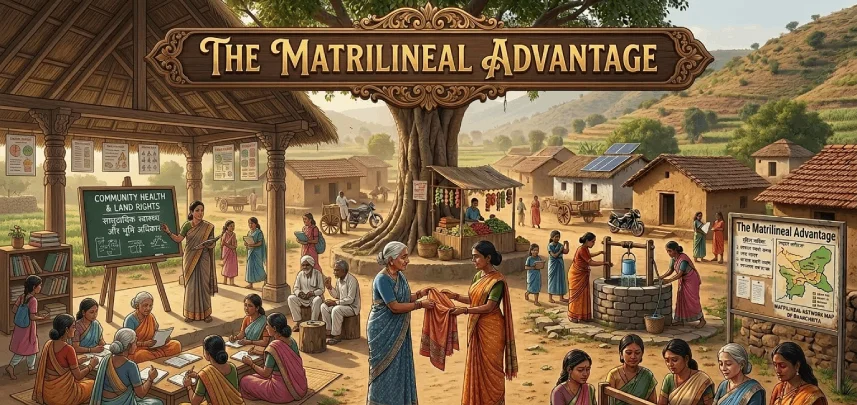
Matrilineal societies are social systems in which lineage and inheritance are traced through the mother rather than the father. Unlike patriarchal systems, where descent, property and authority flow through the male lineage, matrilineal arrangements locate women at the centre of kinship continuity.
In the Indian context, matriliny does not imply matriarchy. Political authority and community leadership often remain male-dominated. However, matriliny fundamentally reshapes household incentives by guaranteeing women long-term claims over property, residence and lineage membership.
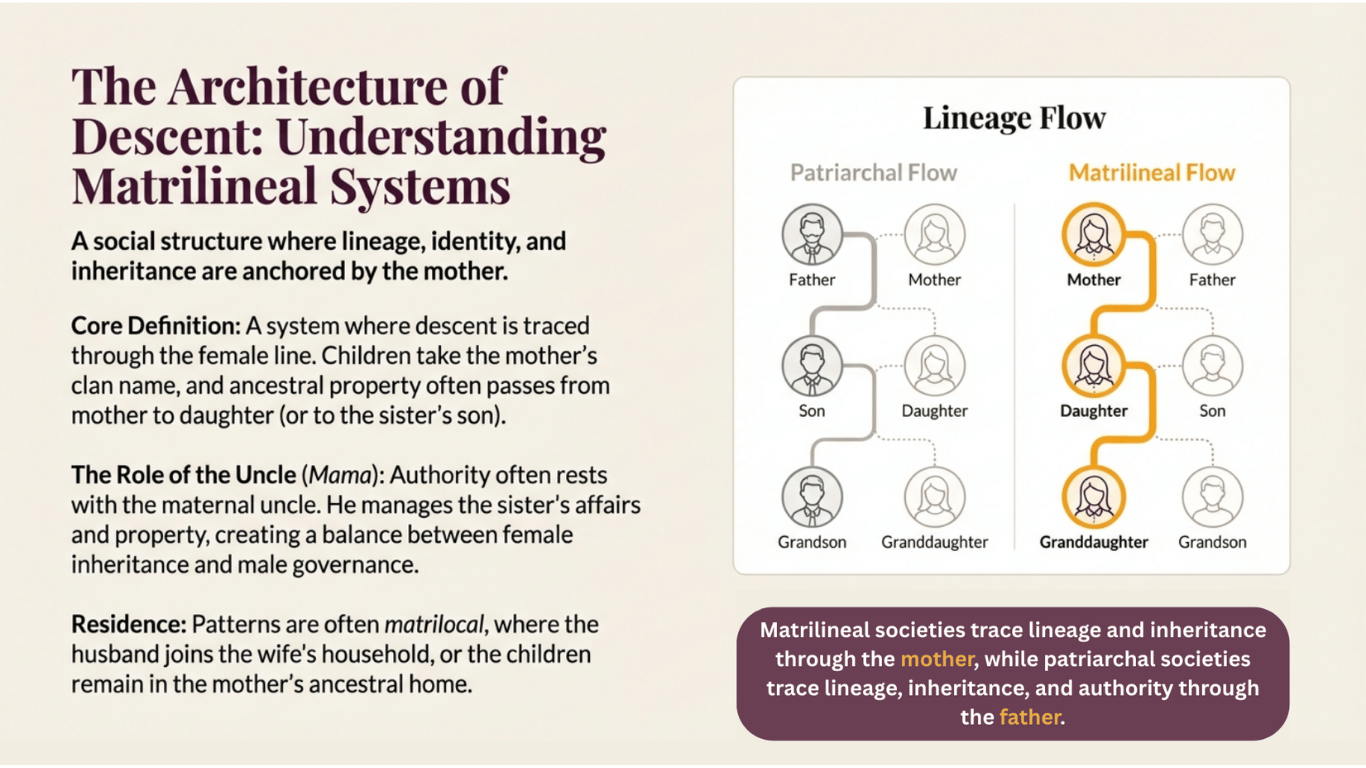
A defining feature of several Indian matrilineal systems is ultimogeniture, where the youngest daughter inherits ancestral property. This institutional arrangement ensures that women are not viewed as temporary members of their natal households. Instead, daughters remain central to the economic and social reproduction of the family. This distinction is analytically important because it alters how households allocate resources across children, particularly in education, health, and survival.
Where Does Matrilineality Exist in India?
In India, matrilineal cultural practices are geographically concentrated rather than diffuse. They are primarily found in the hill districts of Meghalaya and the coastal belt spanning Kerala and Karnataka.
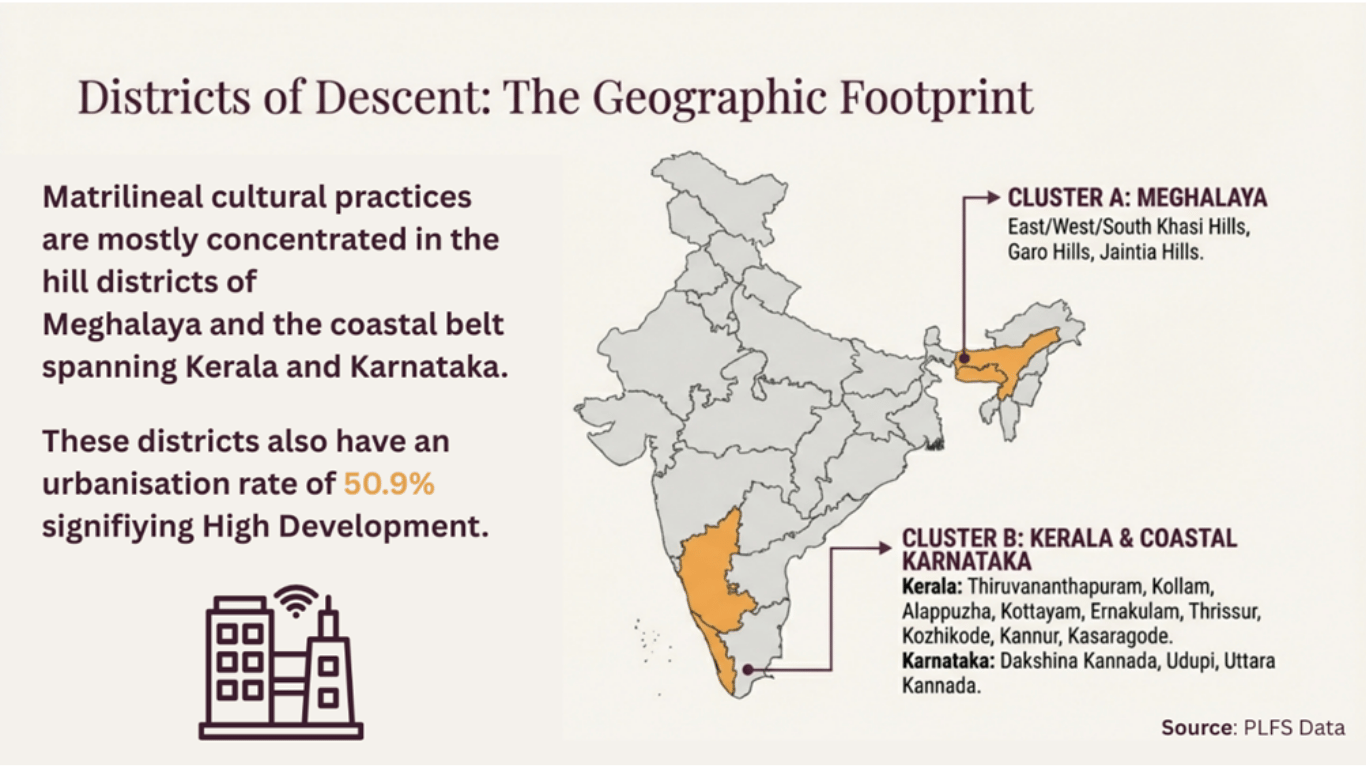
Source: Periodic Labour Force Survey
Importantly, these regions are not development outliers. Data shows that matrilineal districts have an urbanisation rate of 50.9 per cent, signalling relatively high levels of infrastructure access, labour market integration, and public service availability. This context matters: it allows for a meaningful comparison with national averages, rather than attributing outcomes to isolation or underdevelopment.
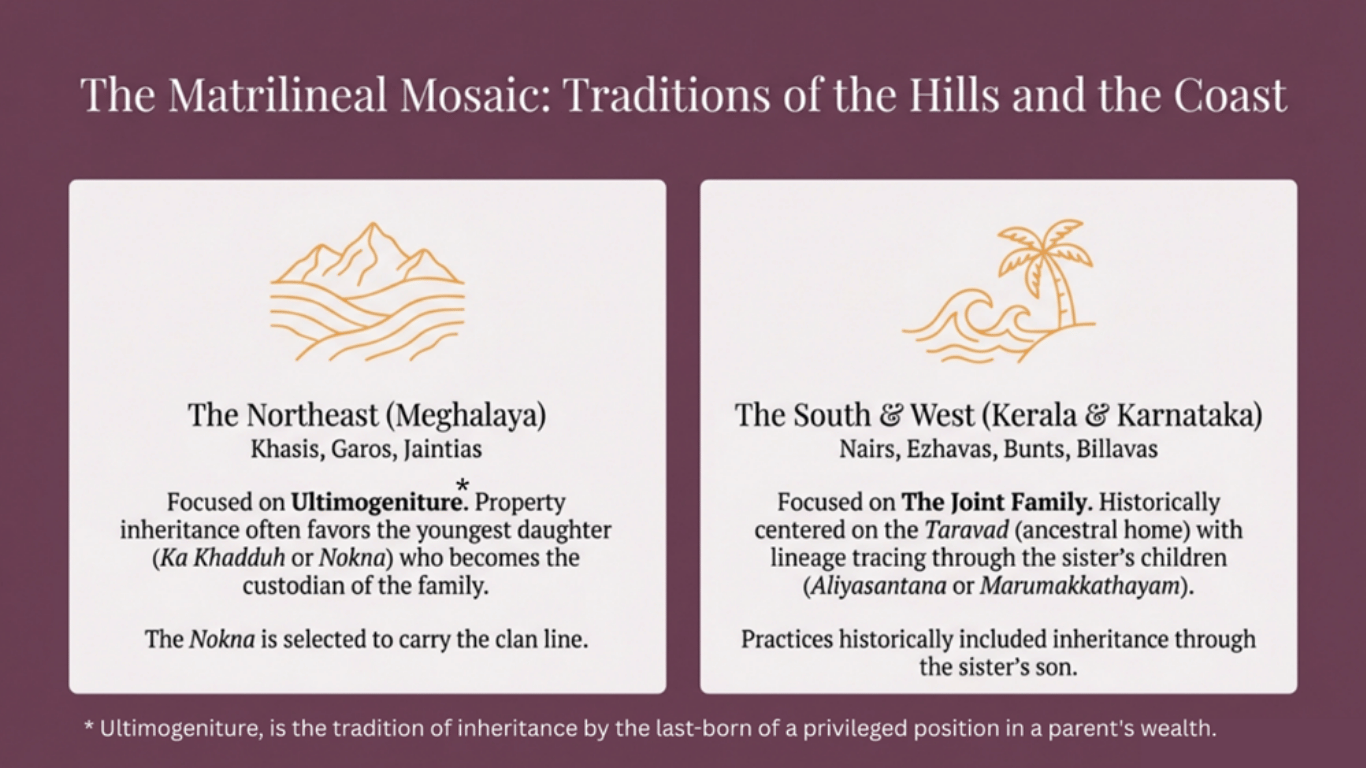
The Matrilineal Advantage: Insights from the Periodic Labour Force Survey
A Different Equilibrium in Demographic Patterns
Within this structural setting, the clearest differences emerge in demographic outcomes. Sex ratios in matrilineal regions significantly outperform the all-India average. While India continues to exhibit a female deficit, matrilineal districts record sex ratios are about 1,116 females per 1,000 males, compared to national ratios that remain below parity. This represents a gap of over 100 females per 1,000 males, indicating not a marginal difference but a fundamentally different demographic equilibrium.
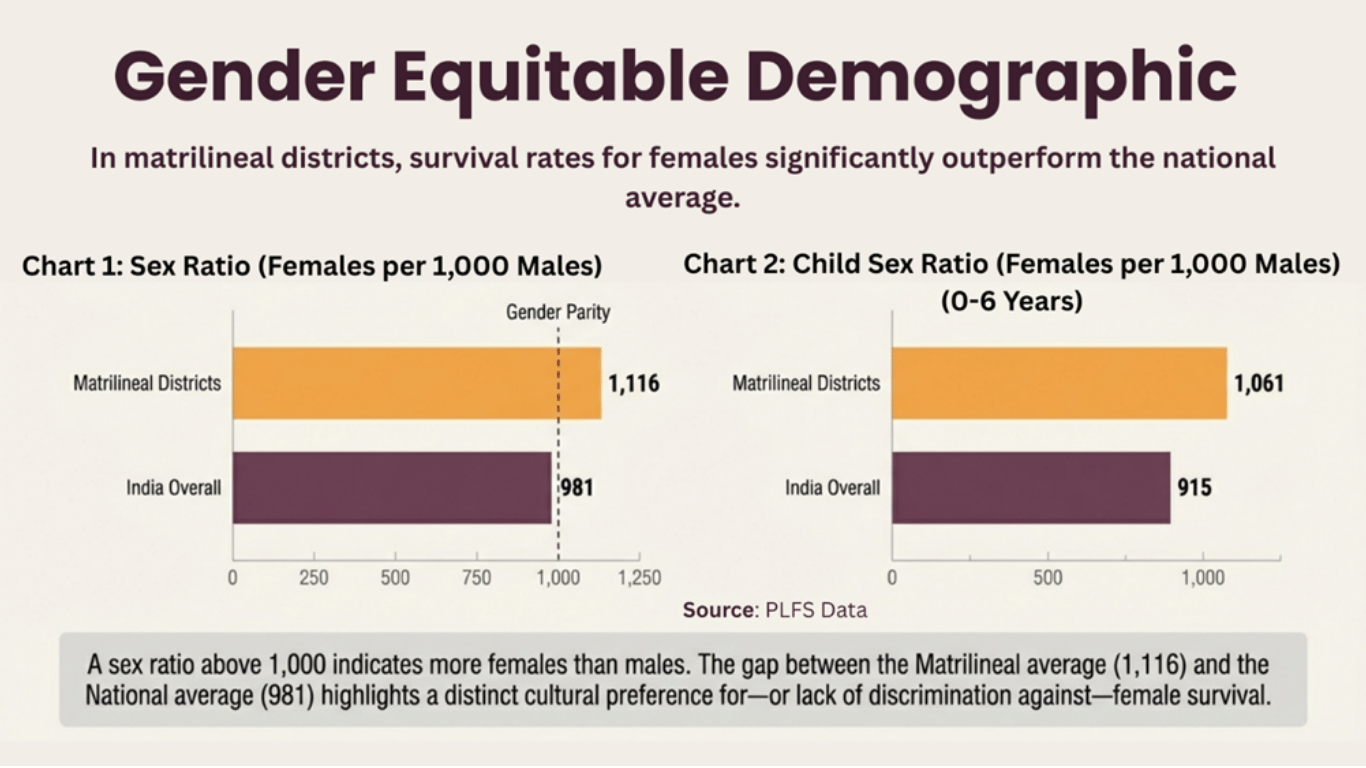
Source: Periodic Labour Force Survey
This advantage is visible early in the life cycle. Child sex ratios (0–6 years) in matrilineal districts are also consistently higher than national averages, suggesting weaker son preference and lower incidence of gender-biased practices before and after birth. Nationally, skewed child sex ratios reflect persistent prenatal discrimination and differential care. In contrast, matrilineal regions demonstrate a narrowing or reversal of this bias, implying that daughters are not systematically devalued at birth.
Importantly, the demographic advantage persists beyond childhood. In matrilineal districts, favourable sex ratios extend into adulthood and older age groups. This contrasts with national patterns, where women often face cumulative disadvantages due to nutrition gaps, healthcare access and labour burdens. The stability of sex ratios across age cohorts suggests that matriliny reduces not only early-life discrimination but also long-term survival penalties faced by women.
Narrower Education Gaps
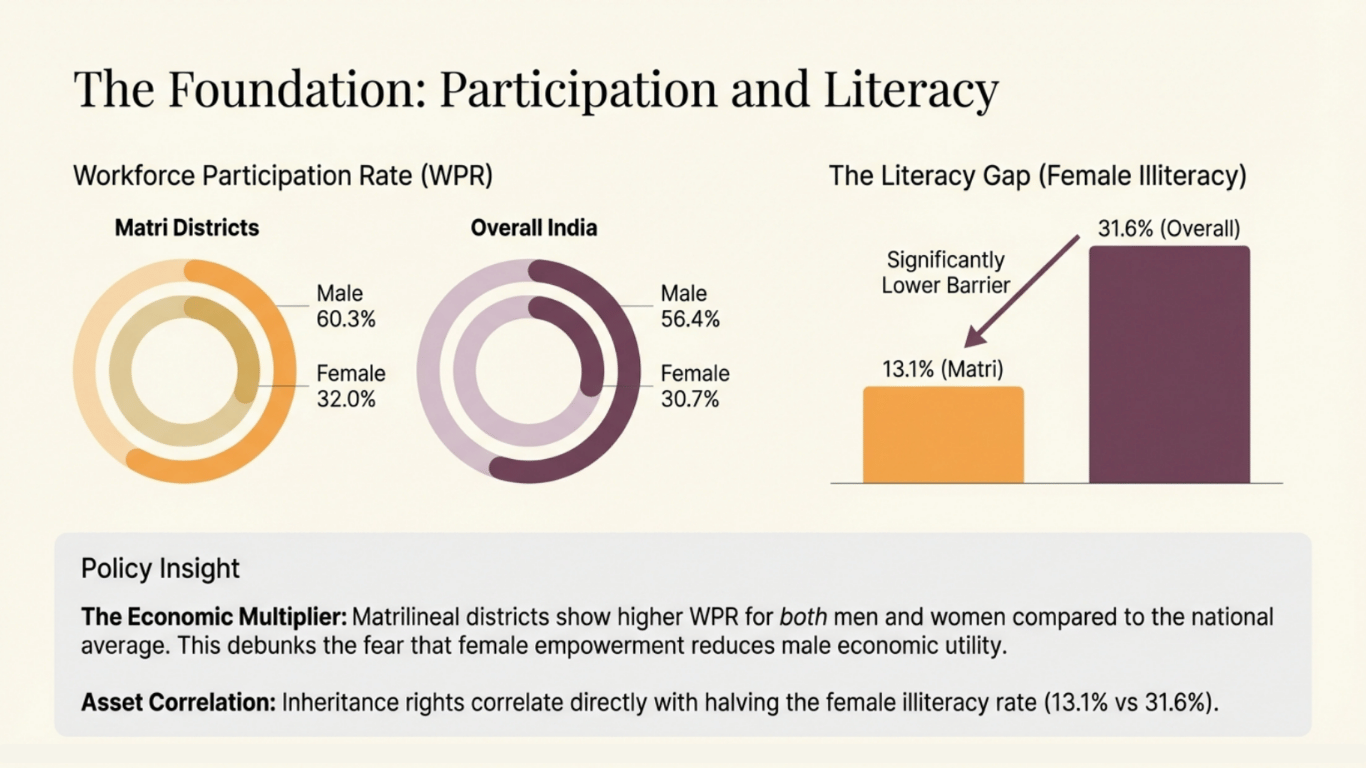
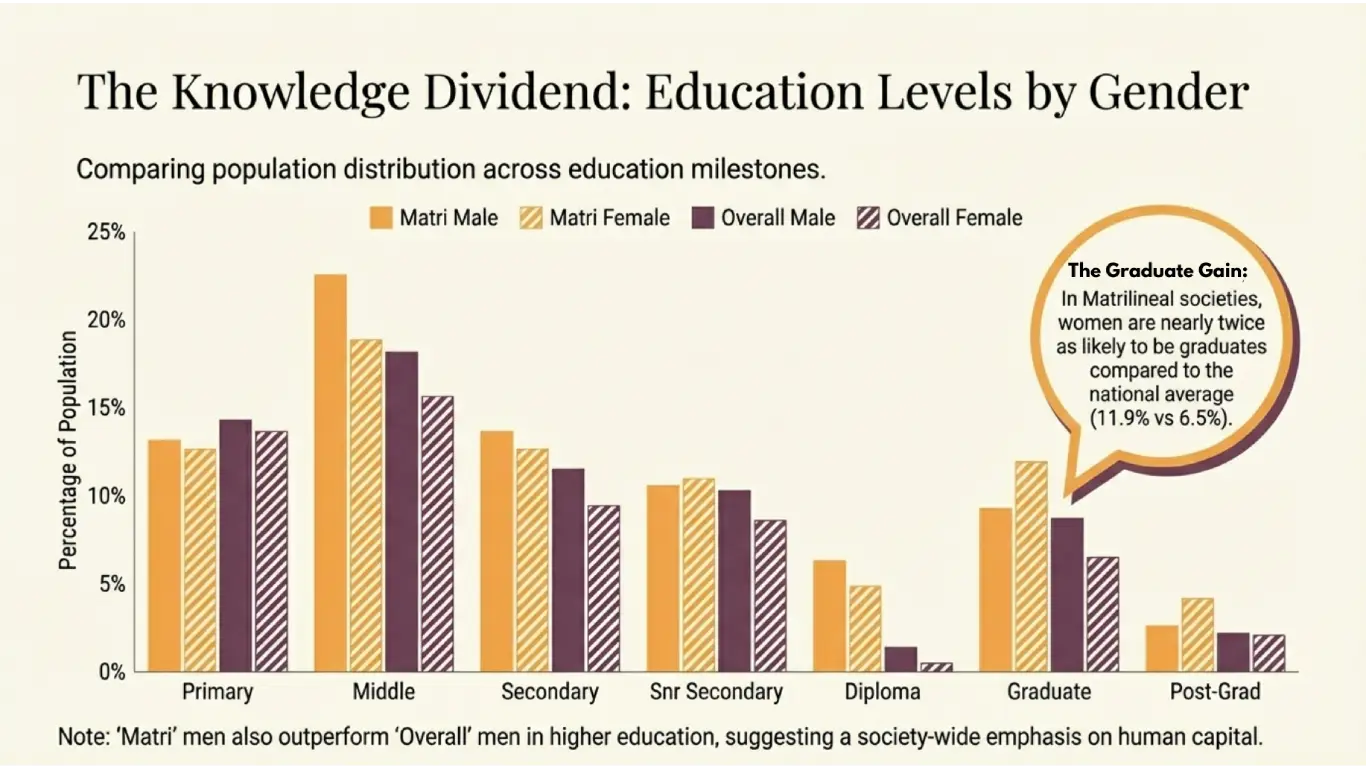
Educational outcomes further reinforce the matrilineal advantage. Quantitatively, matrilineal districts show a lower proportion of women with no formal education and a higher share of women completing secondary and higher education relative to national averages. The divergence becomes most pronounced at the graduate level. Inheritance rights correlate directly with halving the female illiteracy rate.
While the national distribution shows a sharp decline in female participation beyond secondary education, matrilineal districts exhibit a distinct graduate gain, with women forming a substantially larger share of graduates than the national female average. This educational advantage is not driven by male underperformance. From a quantitative standpoint, this produces a more symmetric education profile than what is observed nationally.
Source: Periodic Labour Force Survey
Gains in Labour Force Participation
Labour force participation presents a more moderate, but still notable, divergence. Female workforce participation rates in matrilineal districts exceed the national female average, indicating lower social barriers to women’s economic activity. However, the magnitude of this gap is smaller than that observed in education or demographic indicators. This suggests that while matriliny enhances women’s human capital and bargaining position within households, labour market outcomes remain constrained by broader structural factors such as informality and sectoral segmentation.
Nevertheless, matrilineal districts show higher WPR for both men and women compared to the national average. This debunks the fear that female empowerment reduced male economic utility.
Lessons from Matriliny
Taken together, the evidence points to a clear institutional mechanism. When women retain property rights and remain within the natal household, investments in their education and well-being are seen as long-term household assets rather than losses. This is reflected in higher female educational attainment, more balanced sex ratios, and improved labour force participation.
Matriliny acts as an equalising force within families, even where broader political and economic systems remain patriarchal. Although matrilineal districts are relatively urbanised, similarly urbanised regions elsewhere in India do not show comparable gender-equitable outcomes. The difference lies in how kinship and inheritance systems shape household incentives.
Overall, matrilineal systems in India compress gender gaps in survival, education, and work. They do not erase inequality, but they shift outcomes in women’s favour and underline how strongly inheritance and family structures influence development trajectories. Gender disparities, in this sense, are not fixed—they are produced by institutions and can be changed by them.
Matrilineal societies, therefore, offer more than a cultural footnote. They serve as a living example of how alternative social arrangements can foster more balanced socio-economic outcomes, and they prompt a rethinking of how gender equity can be embedded in the foundations of development.