Mar, 2026
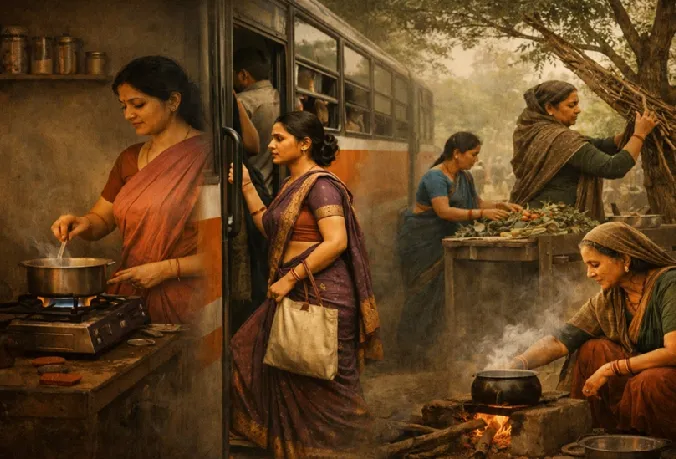
At first glance, the slowly brewing energy crisis appears to be a macroeconomic event—triggered by geopolitical tensions, supply disruptions, or volatile global markets. But its consequences will be far more intimate, as they will play out in kitchens, on crowded buses, and within already stretched household budgets – all largely women’s dominions. Consequently, if left unaddressed, the next energy shock could potentially set back some of our hard-won gains in gender equality. India’s economic resilience amidst global turmoil must not be measured just in terms of growth and stability but must account for how shocks are distributed among different stakeholders.
History offers clear lessons that macroeconomic shocks, from wars and pandemics to commodity price spikes, are rarely gender-neutral and tend to amplify existing inequalities. The Covid-19 episode was the best example in recent times where women bore the greater brunt, globally. This is because women—positioned at the intersection of paid work and unpaid care—absorb a disproportionate share of these shocks.
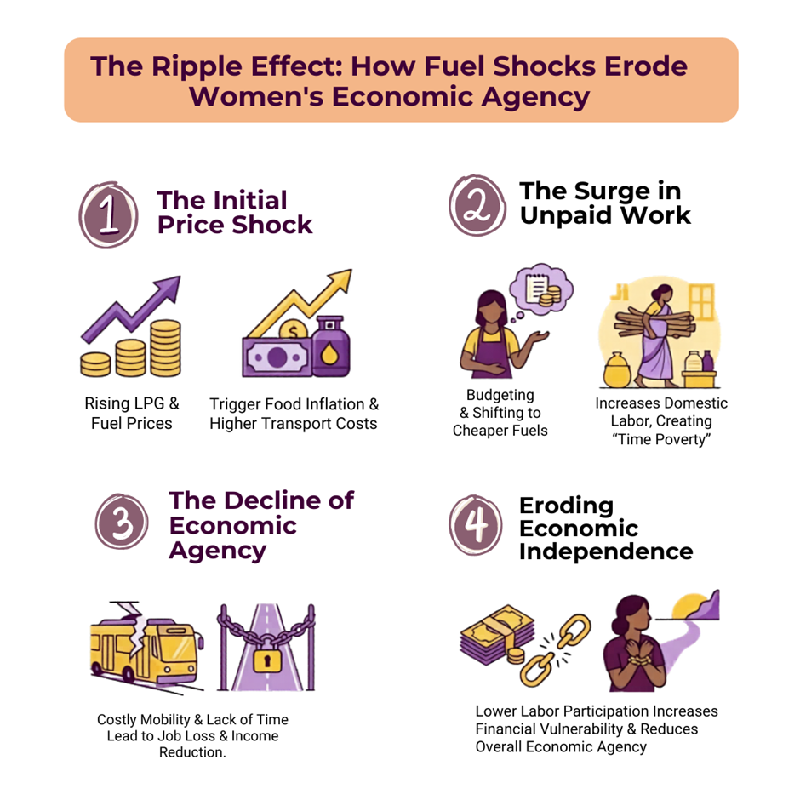
*Note: This infografic image is genrated using AI
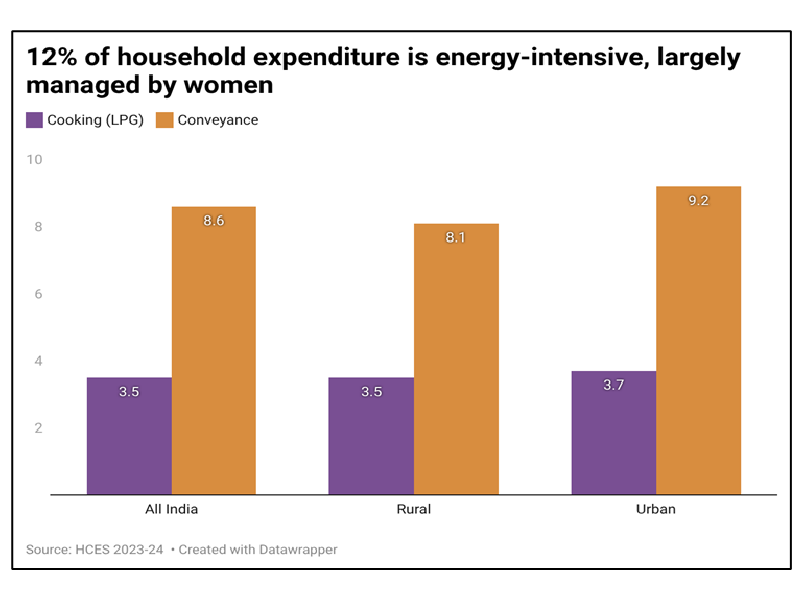
While India may not be directly exposed to geopolitical conflict, any sustained increase in energy prices will transmit quickly through impacts on cooking fuel, transport, and food—three domains where women bear primary responsibility. Household data already reveals this exposure. Indian households spend a significant share of their consumption—around 12 per cent—on energy-intensive needs such as cooking and conveyance (Figure 1). These expenditures shape daily routines, and women, as primary managers of household energy use, are at the centre of these adjustments.
Figure 1 – Share of Household Expenditure on Cooking (LPG) and Conveyance (in percent)
From a gender perspective, the time dimension of these energy-intensive activities like cooking and traveling is particularly critical. India’s Time Use Survey shows that women spend over 5 hours a day on unpaid domestic work, including cooking, fuel collection, and caregiving. When energy becomes more expensive or less accessible, this burden tends to expand—often invisibly, via the LPG, transport and inflation channels.
Clean Cooking Gains are Especially at Risk
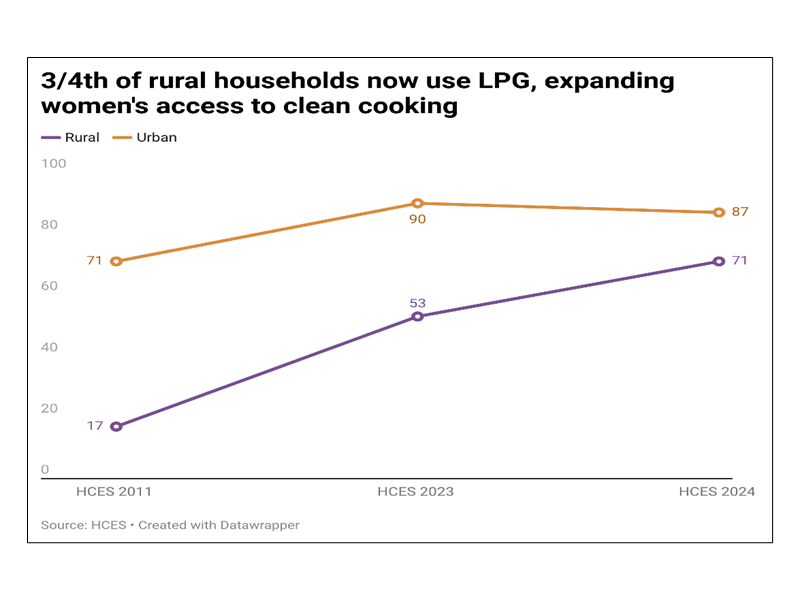
Over the past decade, India has made remarkable progress in expanding access to clean cooking fuel. The LPG consumer base has grown to nearly 33 crore households, supported by initiatives such as the Pradhan Mantri Ujjwala Yojana (PMUY). Nearly 80% of India’s households now use LPG (Figure 2). But this transition has been more than an energy reform—it has been a quiet gender transformation.
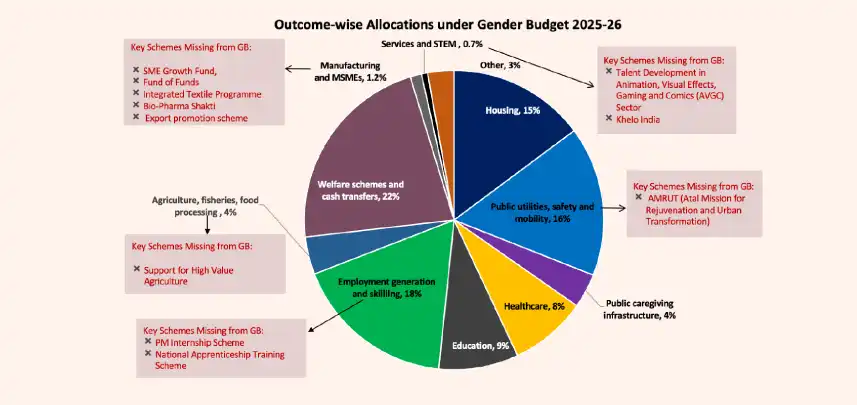
By including the budgetary allocation for the Pradhan Mantri Ujjwala Yojana (PMUY) under Part A of the Gender Budget Statement of the Indian Union Budget (schemes that are 100% women-specific) – the government has clearly indicated that cooking gas is a means to empower women, and it has successfully provided over 10 crore LPG connections to women from low-income households.
Figure 2: Share of Households Using LPG (in percent)
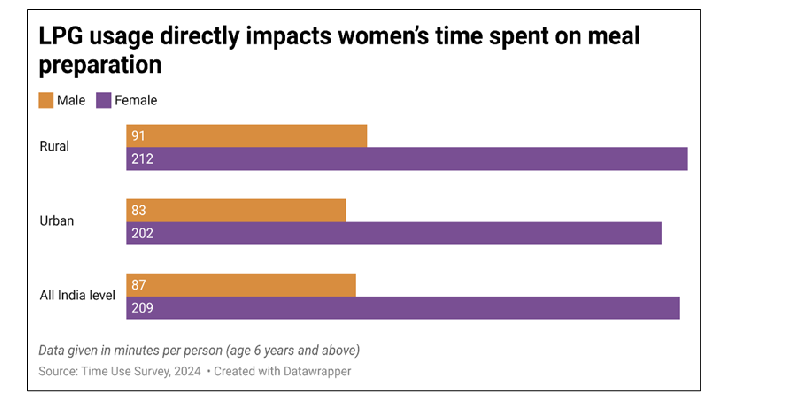
Since it is the women who spend the most of amount of time on cooking and meal prep, way more than men (Figure 3) – and for millions of women, LPG access freed up time that could be devoted to income-earning activities, education, or rest.
Figure 3: Daily Time Spent on Meal Preparation (in minutes)
But these gains remain fragile. Evidence from rural India shows that when LPG refills become expensive, households often revert to traditional fuels such as firewood or dung cakes – something already being witnessed after the perceived LPG shortage. If families shift from LPG back to biomass fuels, meal preparation becomes slower and more labour-intensive—cooking takes longer, requires constant monitoring of the fire, and often involves hours spent collecting fuel. Another risk emerges when mid-day meal schemes in schools or meals in Anganwadi centres are affected by rising fuel costs or supply constraints, the responsibility for preparing meals may shift back to households—once again increasing women’s workload.
Even in urban areas, energy inflation reshapes household behaviour. As fuel prices rise, families may reduce eating out and rely more on home-cooked meals. If school meal programmes are disrupted, children may need to carry food from home. Individually, these adjustments may appear minor, but collectively they expand the daily cooking burden—and that burden overwhelmingly falls on women.
For instance, during the COVID-19 lockdown, closure of restaurants, schools, and workplaces shifted many services back into the household. Consequently share of women spending more than two hours daily on cooking rose sharply, while men’s contribution changed only marginally (evidenced from the State of Working India report). A similar pattern could emerge during an energy shock.
Energy Prices Will Impact Women’s Mobility, Work, and Opportunity
The second channel of gendered impact of Energy shocks is their impact on reshaping mobility as rising fuel prices increase the cost of both public and private transport, making commuting more expensive. This matters because transport is already a major component of household expenditure—now exceeding several essential consumption categories in urban India and rising steadily in rural areas (Figure 1).
Women are particularly affected. Evidence (by World Bank) shows that, around 45 percent of women in India walk to work, compared to 27 per cent of men—largely because affordable transport options remain limited. They are also more likely to depend on affordable public transport and often engage in “trip chaining”—making multiple short trips to balance work, childcare, and household responsibilities. Increased transport costs disrupt this delicate balance.
The deeper structural impact of the constraints on mobility is on women’s time, and the multiplier effect of pushing women out of the workforce or limiting them to less productive, home-based work. This is critical as women’s labour force participation in India remains modest, hovering around 35–37 per cent.
At the same time, energy shocks contribute to food inflation through higher transport and input costs. With imported inflation already showing evidence of elevation due to global factors, household budgets face additional pressure. In many households, women are responsible for managing these trade-offs—often prioritising family nutrition at the cost of their own consumption.
The Urgent Mandate: Forge Gender-Responsive Energy Defences Now
Energy shocks are inevitable—but turning them into gender catastrophes is a policy choice we must reject outright. India cannot afford to let women shoulder the invisible fallout yet again. Bold, targeted responses are non-negotiable to safeguard hard-won gains in women's time, mobility, and economic agency.
Three Immediate, Non-Negotiable Actions:
Long-Term Structural Overhaul—Start Today:
Ignoring this blueprint condemns women to endless unpaid drudgery, eroded health, and stalled opportunities—derailing India's growth story. Policymakers must therefore, design energy responses with gender at the core, or watch equality evaporate in the face of the next shock.
-------------------------------------------------------
Sources
1. Han, J., & Wei, Y. (2021). Household energy demand and environmental impact studies.
2. Kooijman, A. et al. (2023). Gender and household energy use research.
3. Afridi, F. (2021). Raising the Value of Women's Time for a Transition to Clean Fuels. Ideas for India.
4. Ministry of Petroleum and Natural Gas (2023). LPG coverage and PMUY statistics.
5. NFHS-5 (2019–21) and NFHS-4 (2015–16), International Institute for Population Sciences. https://www.thehinducentre.com/the-arena/current-issues/69076238-NFHS-5_Phase-II_0.pdf
6. Periodic Labour Force Survey (PLFS) Annual Report 2022–23, MoSPI.